America’s Iliad: A Review of Shelby Foote’s Civil War: A Narrative
At Shiloh National Military Park, situated on the banks of the Tennessee River just ten miles north of the Mississippi border, there lies an ornate stone statue commemorating the Confederate dead who fell at that battle in 1862. The monument’s name, Defeated Victory puzzled me when I visited it three years ago, part of a small tour of Civil War battlefields I undertook while in the area. I have read more about that still controversial war since, and it is only now, having closed the final chapter on Shelby Foote’s unparalleled three volume series, The Civil War: A Narrative, that I begin to see meaning behind those seemingly oxymoronic words.
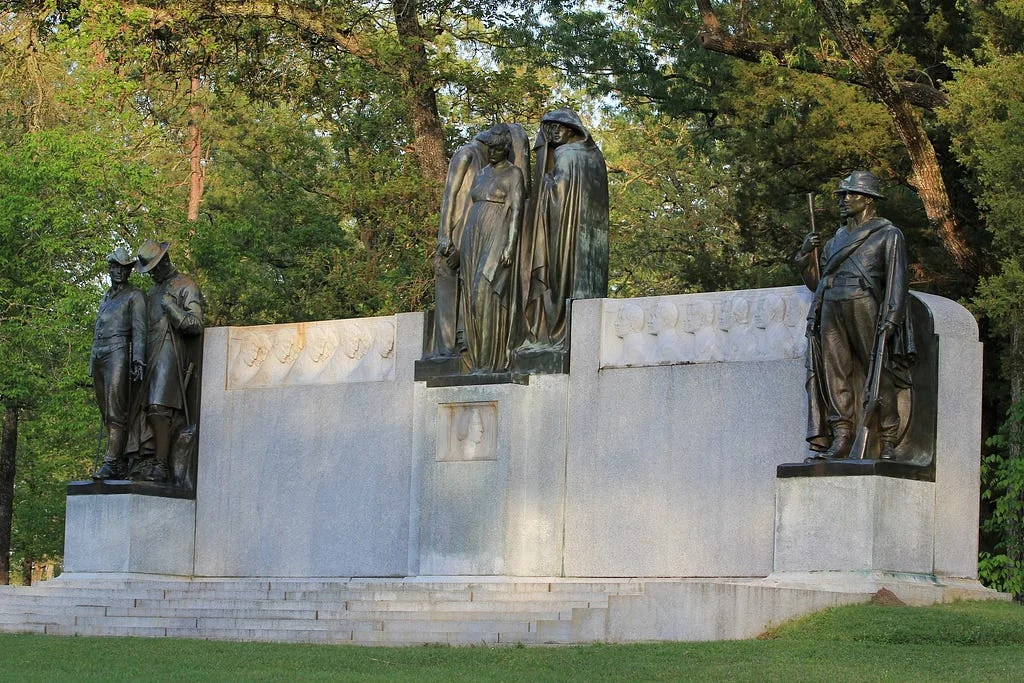
In some strict sense of course they are a commentary on the battle itself, which saw an early Confederate advantage — achieved through their surprise attack in the early dawn of April 6th — brought to an abrupt halt, first by the unexpected death of the Southern commander, Albert Sidney Johnston (the highest ranking officer on either side to die during the war) and then by the dogged determination of Grant and Sherman — then both relatively unknowns in the story, but already friends — who held on enough to prevent a total rout and survive until nightfall. Determination notwithstanding, it was taken as a given by both sides that the Rebel army would finish the job come morning. General P.G.T Beauregard, the diminutive Creole who assumed command following Johnston’s death, took the premature liberty of informing Jefferson Davis by wire of his “complete victory” achieved that day in “driving the enemy from every position.” Even Sherman, about whom no one could say he desisted easily, found little to be optimistic about as night fell that evening. Approaching Grant on the outskirts of camp, Sherman found his fellow Ohioan sitting in the pouring rain puffing on one of his signature cigars: “Well Grant, we’ve had the devil’s own day, haven’t we?” Without getting up, the future president drew the cigar from his mouth and remarked with characteristic stoicism, “Yes. Lick ’em tomorrow though.” Grant wasn’t wrong. The next day saw Union reinforcements in the form of Don Carlos Buell and his Army of the Ohio on the scene, which turned the tide and forced the Confederates back into retreat. Beauregard’s “complete victory” had been defeated.
In a broader sense, however, that monument’s title speaks to something about the South’s interpretation of the entire war and its legacy: Defeated Victory. For many Civil War battles, the question of which side ‘won’ often does not admit of a simple one-word answer, since it depends on the wider strategic (and political) context in which the battle was fought. Such context was usually not apparent to the participants themselves. In Grant’s Overland Campaign for example, Lee fought three field battles with the Union commander: first in the entangled forest of the Wilderness, then at Spotsylvania Courthouse, and then at Cold Harbor, before settling in for the siege of Petersburg. In some strict sense Lee ‘won’ each of those battles in so far as he inflicted more casualties than he sustained. But in a wider context that tally of the fallen didn’t matter, firstly because the Union enjoyed a 3:1 advantage in troops anyway and secondly because Grant continued pressing south towards Richmond the entire time. Eventually, at a staggering cost of about 100,000 casualties, he took the Confederate capital and soon after bagged Lee’s whole army. Those battles the ‘masterful’ tactician Lee won were Defeated Victories — or maybe they were victorious defeats. Either way, can a similar thing be said about the war itself? Who really won that war, and in what sense? To do that one has to understand what the key objectives of each side were, which gets us into the thorny question which plagues our politics to this day: what was each side in the American Civil War fighting for?
Foote himself (a proud Mississippian it must be noted) has been eagerly quoted by Southern apologists for having quipped in an interview that “not a soldier fighting on either side gave a damn about the slaves.” Hearing that one thinks that Ta-Nehisi Coates might be right in his critique that “understanding the Civil War was a luxury [Shelby Foote]’s whiteness could ill-afford.” I think what bothers me most about it is that this remark is at odds with very plain facts included in Foote’s own book. For one thing, he details the fact that one out of every ten Union soldiers was black, many of them ex-slaves who made a dash to freedom across the picket lines when the Union army approached. Presumably they, at a minimum, did “give a damn about the slaves”, if for no other reason than it meant giving a damn about themselves. These US Colored Troops (USCT) shouldered a burden of having to prove what was granted without question of white troops, namely that they had the competency to fight. They proved it many times over, most notably at the siege of Port Hudson in 1863. “It is no longer possible to doubt the bravery and steadiness of the colored race” the New York Times wrote, after reports of the battle arrived by wire. They told of the heroic daring of black troops, led by the ‘American Spartacus’ André Cailloux, a former slave turned Union army captain who himself was mortally wounded in the battle while leading a charge against entrenched Confederate fortifications. Further confirmation came at Nashville in 1864, where stiff resilience of the First Colored Brigade held General Hood’s Army of the Tennessee in position on the Confederate right, allowing Union General (and native Virginian) George Thomas to sweep around the rebels left flank in a maneuver which ultimately destroyed Hood’s army as an effective fight force and marked the beginning of the end of the war.
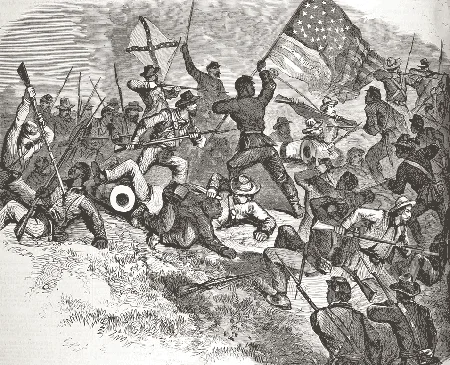
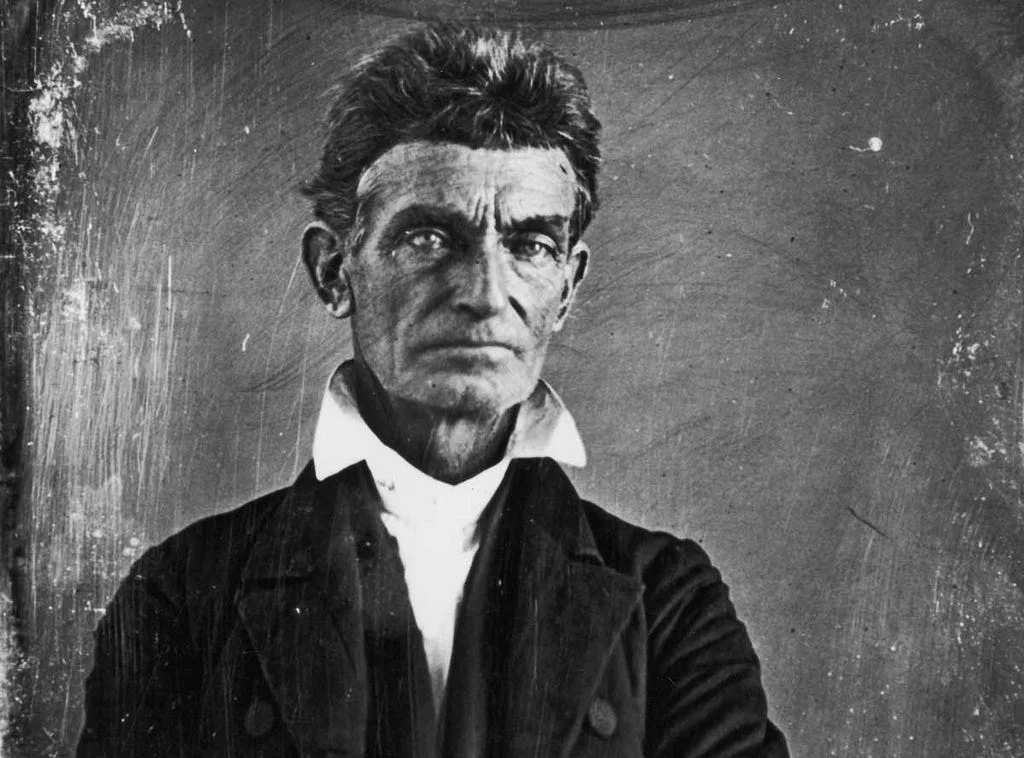
As to the other 90% — those Union soldiers who did not have literal skin in the game, so to speak — what they were fighting for is harder to say. A great many were indeed fighting foremost to preserve the Union, to get it back to how it was — slavery and all — before the South sought to tear it asunder. For others, even this conservative motivation would have been overstating things since they didn’t want to be there at all: they had been swept up in one of Lincoln’s conscription orders, too poor to scrape together the 300 dollar exemption fee, and either too honest or not wily enough to evade the conscription agents. Quite a lot were recent immigrants from Germany and Ireland who just wanted to make it to the end of the war without losing their life or any limbs. Still, despite all this, we can see (or rather hear) in the marching songs some circumstantial evidence that Union soldiers identified with, or at any rate understood, the nobler cause of freedom for which they were now fighting. Though seemingly irreverent, the folk songs men sing often reveal much about their deep seated beliefs: “John Brown’s Body”, a boisterous ballad venerating a madman’s attempt to incite a slave uprising in 1859, was sung at every opportunity and most notably when Sherman’s army pulled out of Atlanta to begin their infamous march to sea. Julia Ward Howe took the melody to that song and set it to new lyrics, which became the famous and very popular ‘Battle Hymn of the Republic.’ This version too made explicit reference to the abolitionist cause:
In the beauty of the lilies Christ was born across the sea
As he died to make men holy, let us die to make men free.
The struggle against slavery was deeply infused with religious belief and in particular with the concept of salvation. It is perhaps because that aspect of it is foreign to our largely secular tendencies that we’re easily led to believe that men of that age didn’t care about slavery at all. For it’s true they did not think about it in terms of ‘human rights’ or any other such trendy modern concepts. They probably also would not have held stock in values of diversity and equality, if even they could be brought to understand what those mean. For a Northern soldier slavery was wrong because it was a violation of God’s will and was practiced against would-be fellow Christians. This is, in essence, the central thesis of Uncle Tom’s Cabin, the novel whose author Lincoln once greeted by saying “so you’re the little girl who started this great war.”
I think this is also the only paradigm in which one can, standing today and looking back, fairly judge and find fault with the Confederate leaders who took up arms to defend an ultimately immoral cause. Lee wasn’t wrong because he was a traitor to his nation. Treachery, as when applied to an individual betraying a political entity, is a curious thing, and the conditions under which it occurs are often complex enough as to confound any generally applicable moral maxims. In the case of Lee, it’s important to remember that he and his home state Virginia, had initially voted against Secession and only rebuked Federal authority after Lincoln had summoned 75,000 troops to invade the South and coerce the recalcitrant states back into union. To the extent that that use of force by Lincoln was itself legally dubious, it seems commensurable to say that the case for Lee’s retaliation being ‘treachery’ is inconclusive at best. Indeed, had the Confederates succeeded, it wouldn’t have been treachery at all and Lee would have taken his place besides Washington as father of the new nation for, as a cynical Englishman once noted: “treason doth never prosper, why if it prosper, none dare call it treason.” In other words, it’s only treason if you lose. But further, moral imperatives not only allow for, but often demand treachery to earthly powers. Thomas More was made a saint for betraying his nation and his sovereign Henry VIII. Nay, the treachery that constituted Lee’s sin was a treachery to a higher master, as W.E.B DuBois noted many years later: “Robert Lee was a traitor and a rebel — not indeed to his country, but to humanity and God.” And it is this treachery which is made worse, not better, by Lee confessing privately to his wife that he knew slavery to be a “moral and political evil.”
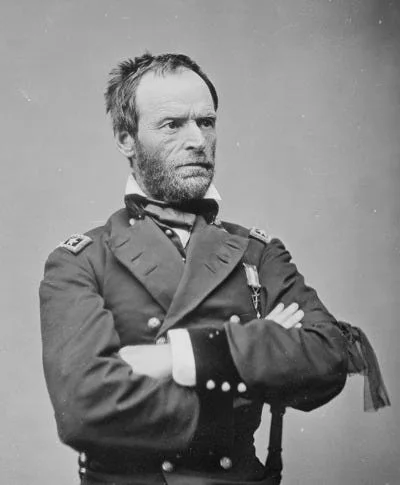
All of this isn’t to say, however, that the Civil War was a simple contest between good and evil. That conclusion, too, would be a mistake and is belied by a few inconvenient facts about the men involved, facts which Foote doesn’t fail to take notice of. Grant himself owned slaves before the war, for example, and never seemed to express much contrition about the matter. Some of his more adoring biographers have done their darnedest to explain and partially excuse it, but facts are stubborn things and this one can’t be neatly varnished away. Even less forgiving is some of his lieutenant’s rhetoric (and accompanying actions), which at times are eerily redolent of the horrors of 20th century total warfare:
“To secure the safety of the navigation of the Mississippi River,” Sherman declared, “I would slay millions. On that point I am not only insane, but mad.… I think I see one or two quick blows that will astonish the natives of the South and will convince them that, though to stand behind a big cottonwood and shoot at a passing boat is good sport and safe, it may still reach and kill their friends and families hundreds of miles off. For every bullet shot at a steamboat, I would shoot a thousand 30-pounder Parrotts [canons] into even helpless towns on Red, Ouachita, Yazoo, or wherever a boat can float or soldier march.”
Then there is the behavior of the rank-and-file Union soldiers throughout the war who, far from an angelic army of deliverers, more often resembled a band of marauders rampaging through their own country. Foote documents a particularly harrowing case in Athens, Georgia, when Union soldiers are turned loose “Cossack-style” by their brigade commander (himself a veteran of the Imperial Russian Army). For an hour they pillaged the town, “raping Negro servant girls and stuffing their pockets with watches and jewelry.” These details serve to remind us that there is rarely any such thing as ‘the good guys’ when it comes to total war.
On the political side too, things get untidy: Lincoln’s famous Emancipation Proclamation was as much a cunning piece of legalese as it was a principled stand against slavery : it freed slaves only in parts of the nation still in open rebellion. It took care to exclude those in bondage in the loyal border states (Maryland, Delaware, and Kentucky) as well as those precise regions of the Confederacy (the city of New Orleans, parts of northern Virginia) then under Federal occupation. In short, as the New York World newspaper noted, “he has proclaimed emancipation only where he has notoriously no power to execute it.” Lincoln of course knew all of this. He had to walk a tight political rope and he did. The proclamation served its real purpose of keeping the European powers — principally Britain — out of the war — coming to the aid of the Confederacy now meant coming to the aid of the dying institution of slavery, and Lincoln knew Britain would not abide that. At the same time he could at least half-heartedly claim to have kept the promise of his inaugural address: “I have no purpose, directly or indirectly, to interfere with the institution of slavery in the states where it exists.”
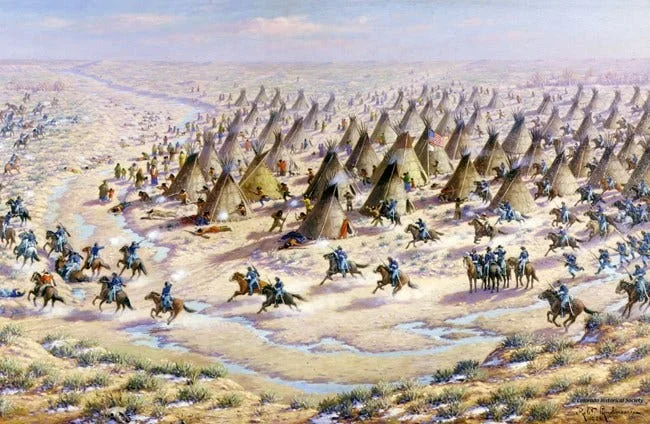
This kind of legal chicanery from the executive office was something that Native American tribes already knew a thing or two about by this point in history. Perhaps that’s why so many of them sided enthusiastically with the Confederacy after Fort Sumter. No doubt they saw in the fractious rebellion a possibility for their own nations to gain a measure of self-determination. And so in what must have been a peculiar sight, they showed up in their hundreds, scalping knives and all, at Elkhorn Tavern, to stand side by side with Arkansans and Alabamians at the largest Civil War battle west of the Mississippi. In fact the last Confederate General to officially surrender in 1865 was Stand Watie, chief of the Cherokee Nation and a commissioned Brigadier-General in the Confederate States Army. Indians further west, far from finding in the white man’s internecine conflict a portion of respite for themselves, endured one the worst massacres in history, and here again our neat division between good guys and bad guys gets murky. The same Union army which with one hand was waging war on the ‘treacherous’ South, with the other sent Colonel John Chivington to stamp out Indian resistance in Colorado. “I have come to kill Indians”, he said in 1863 “and believe it is right and honorable to use any means under God’s heaven to kill Indians.” True to his word, two days later he orchestrated the infamous Sand Creek massacre, in which some 600 Native Americans were killed and mutilated, two-thirds of them women and children. These facts don’t nullify the justness of ultimate Union victory, but they muddy the discussion of morality — as any good historical study is bound to do — and, more importantly for the purposes of this essay, muddy the question of what the war was fought for.
To this question I feel now at liberty to add a more nuanced additional thesis, which is that the answer to what the South was fighting for is contained in the title of Foote’s giant tome: a narrative. What the South feared most from the industrial North in the 1850s was not outright conquest, but a sort of slow absorption, as inevitable as it was ignominious. Inevitable because the mechanization of the North meant it was hitting an inflection point in terms of economic power (and population) that the South couldn’t possibly keep up with (the state of New York in 1860 had more than double the industrial capacity of the entire Confederacy). Ignominious because this power imbalance would mean an erasure of their “way of life” — the economic model of exploitative Black labor is what made possible the entire superstructure of the Southern neo-aristocratic culture. Even those in the North who were indifferent toward the South morally, tended to frown upon it economically. It was backwards — maintained by violence on the one end and accommodating of sloth on the other.
The leaders of the South, for their part, had grown up in the afterglow of the American Revolution. Men like Jefferson Davis, Robert E. Lee, Earl Van Dorn — all had close relatives whose heroism had won the nation its independence from the British Empire. The narrative they heard coming of age was that, with enough grit and will, plucky small nations could (and should) throw off the yoke of large superpowers. They resolved then, to do the same, and to forge narratives of their own. They saw in Lincoln the ghost of King George because they were looking for it, scouring the landscape for a tyrant of their own, against whom they could avail themselves of a struggle.
The South wanted what the revolutionaries had — heroes to build statues to, and myths to put into song. In short, they wanted an Iliad, and that is what they got, more in fact than they bargained for. The American Civil War is America’s Iliad — it is the epic struggle of our nation’s soul, eclipsing the Revolution both in sheer scale (more soldiers died on the first day at Shiloh than in the entire Revolutionary war) but more importantly in defining our character. The Revolutionary War (and its sequel the War of 1812) took place during America’s infancy — they gave the nation its name and its birth certificate. But the Civil War, coming along in the nation’s teenage years, gave America its true character — it determined what kind of nation we would be. Things we now identify as essential to the American project: egalitarian politics, big business & market capitalism, a muscular foreign policy, an emphasis on social mobility and even idolization of the rags to riches story— all these owe their origins to the Union victory in 1865. The South, for its part, which stood in contrast to all these ideas, wanted only that it not be said they didn’t concede them without a fight. As a martial society, it was the noble struggle they wanted even more than the fruits of that struggle.
You can see this in their feelings when the war is brought to a close — they are saddened at the defeat, but perhaps not for the exact reasons one would expect: “We were bereft of a cause for which to struggle and suffer” was how James Waddell, the captain of the CSS Shenandoah, the last entity to fly the Confederate flag, lamented as he pulled into Liverpool port and was told the news that the war on the American continent had come to a close six months prior. Part of the reason that this explanation for the war has been lost over the ages is that the feelings behind it are so alien to our modern sensibilities. We see war only as a mournful tragedy, to be avoided at all costs, but that is a recent phenomenon in the human psyche, etched there by the incomprehensible loss of life in the first and second world wars. For much of history, however, war, and specifically glory on the battlefield, was sought after with great enthusiasm. Lee himself says as much at the battle of Fredericksburg: “It is good that war is so brutal, or we should grow fond of it.” Sherman tells us something similar about the rank-and-file, when discussing the ‘types’ of Southerners he encountered: what was keeping the war going, he said, were the “young bloods of the South, men who never did work and never will…War suits them” he stated matter-of-factly. When Nathan Bedford Forrest wanted to recruit cavalrymen in his hometown in Tennessee, he made in his appeal no defense of slavery, nor of constitutional rights. He knew his audience, and what would motivate them: “Come on boys”, read his recruitment poster, “if you want a heap of fun and to kill some Yankees.”
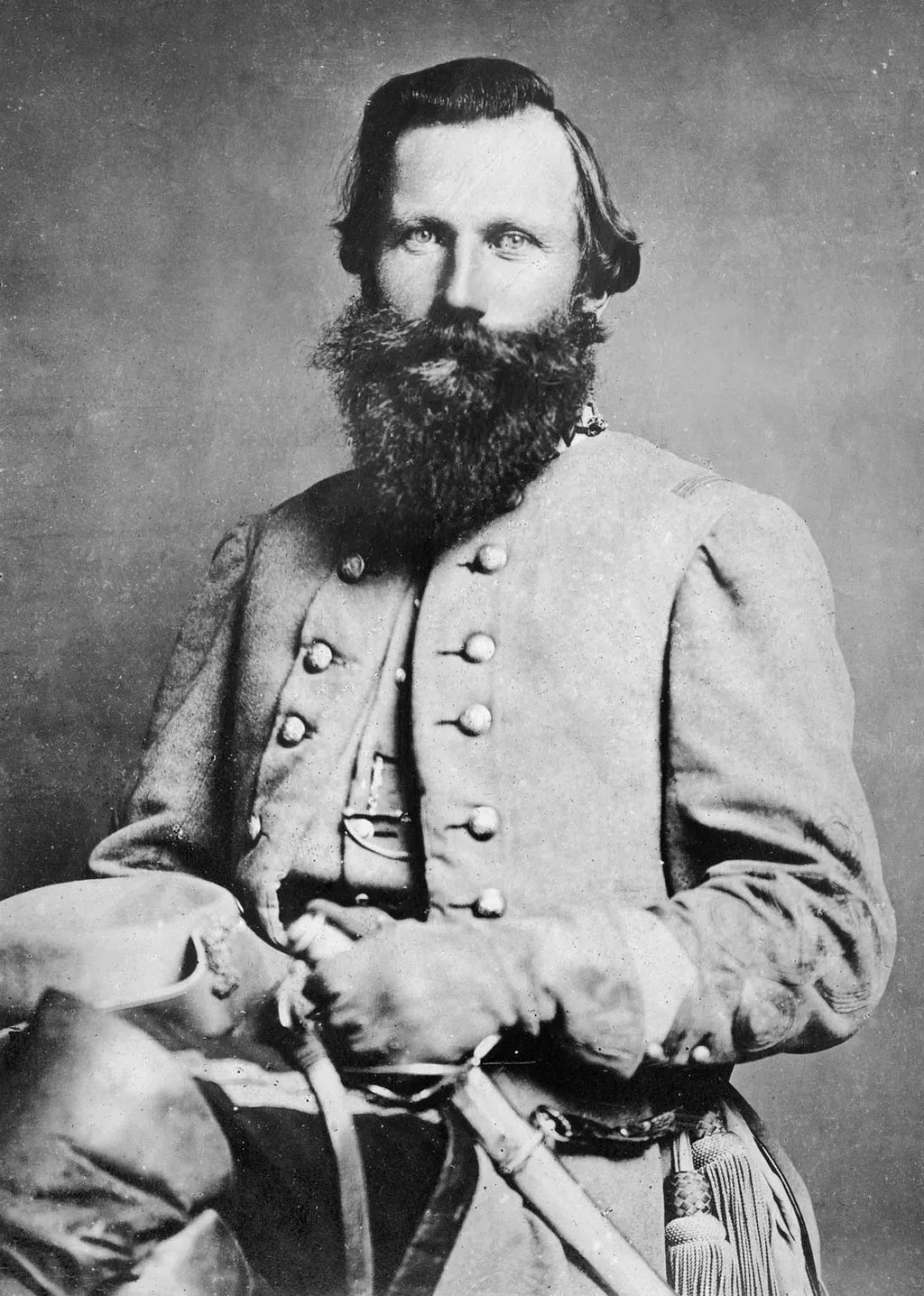
The irony of course is that it was precisely because they were still fighting the wars of their fathers that the Confederacy lost. The Civil War was the first modern war, but most of those fighting it didn’t realize that yet. Southerners, especially, flamboyant men like John Hunt Morgan and J.E.B. Stuart, seemed to take the view that they were living out a fantasy tale, that they were characters in a story and it was all a sort of grand romp, a gentleman’s game. Both cavalrymen (the Confederacy enjoyed a distinct advantage in cavalry early in the war as Northerners did not grow up riding horses the way Southerners did), Morgan and Stuart spent the war conducting grand rides into enemy territory. In theory these rides were to reconnoiter the enemy positions and to disrupt enemy supply lines, and to some extent they did serve that purpose. More often than not though, they were a chance to show off their daring and accomplish some trick which served no military purpose but did make for a good story, such as when J.E.B Stuart, slighted at having had his favorite plumed hat stolen by Yankee troops, went dashing off into the night on a raid of the Union camps. They came away not with important supplies, but with Major General John Pope’s favorite coat. With great glee Stuart then penned this letter on his return: “General. You have my hat and plume. I have your best coat. I have the honor to propose a cartel for the fair exchange of the prisoners. Very Respectfully, J.E.B. Stuart Maj. Genl. C.S.A.” Morgan, for his part, defied explicit orders from his commanding officers on multiple occasions to go on rides through Kentucky. When he caught word that a young woman in Murfreesboro, having heard of his famed exploits, had become so taken with him that she had declared (perhaps riskily) to a Union officer that she “hoped one day to call [herself] the wife of John Morgan”, he rode into town and married her on the spot, before dashing off again with his band of merry men. No doubt these escapades made for good fun — the problem for the Confederates was in the meantime the South was being slowly strangled to death, economically and militarily, in a war for its very survival.
For this was, in fact, not a pre-modern war of knight errants and of damsels in distress; rather it was a modern war of muddy trenches, of money and manufacturing, and of ignoble butchery. Moreover it was one of the first wars between democracies and as Rosseau clairvoyantly remarked, “the wars of democracies will be crueler than the wars of kings.” So it was so — the war was brought against the population for the first time by the one man who did understand what war had become, William Tecumseh Sherman:
“[T]his war differs from European wars in this particular: We are not only fighting hostile armies, but a hostile people, and must make old and young, rich and poor, feel the hard hand of war, as well as their organized armies.”
This attitude towards war, viewing it as a conflict between populations rather than just their professional armies, seems so commonplace to us now as to make the remark superfluous. At the time though, it was a stark and powerful prophetization. Sherman was not a monster, he was just ahead of the curve.
In some sense the greatest outcome, especially as a Southern leader, was to die during the war itself, as so many did: Albert Sidney Johnston, shot from his horse as he rallied a charge at Shiloh; Bishop Leonidas Polk (the Fighting Bishop) cannonaded from across a mountainous valley by the precision targeting only a German immigrant could manage; William Barksdale, dropped by sharpshooters as he led what a Union colonel described as the “grandest charge ever made by mortal man” on the second day of Gettysburg. Some were even explicit about wanting that kind of glorious demise: “I have no wish to see the end of the Confederacy” A.P. Hill had remarked ominously to an aide, just days before riding recklessly off to gather his troops as the lines at Petersburg began to waver. He was shot by an overzealous private and corporal duo who had wandered ahead of their regiment during a Union attack. When Lee heard the news, he let slip a sentiment shared by many on rebel staff: “He is at rest now, and we who are left are the ones to suffer.”
Before their corpses were even cleared from the field, these men had entered the burgeoning pantheon of Southern heritage. They had given the ultimate sacrifice in securing for the South what it had gone to war for in the first place: a chapter in the historical record. This is the sense in which the Southern defeat had its victorious nature. By 1865 their economic system might be extinguished, their lands ceded, their leaders dead or in chains but they would not be a mere footnote of history. “The South was conquered but never subdued!” bellowed one civilian as the paroled Confederate soldiers trudged back to their homes. A failure to understand this — this Southern “Defeated Victory” — is what ultimately doomed the Reconstruction project. For in an ironic sense the ‘South’ as a distinct region with a distinct culture was more unified after the war than before or during it; and as such had more power in standing up for its ‘way of life’ against the forces of modernity.
Whatever arguments one might bring to bear, the sheer scale of human loss, if indeed able to be fathomed, does tend to make a mockery of any discussion of what this or any modern war was fought for. The finitude of death seems to swallow any rationalization or vindication. Instead one feels resigned to the blunt nihilism of a Georgian infantry officer, who said when it was all over: “I’ve killed as many of them as they have of me. I’m going home.”