The Mongrel Hordes: How Immigrants Fought America’s Civil War
Last year, in remarks to the Claremont Institute, Vice President JD Vance made the astonishing claim, amidst an anti-immigrant screed, that “people whose ancestors fought in the Civil War have a hell of a lot more claim over America than the people who say they don’t belong.” He followed with a sardonic jab at then-mayoral candidate Zohran Mamdani: “I wonder, has he ever read the letters from boy soldiers in the Union Army to parents and sweethearts that they’d never see again?”
I’d wanted to write a full rebuttal, since this claim irks the ears of anyone with even a cursory understanding of the Civil War and the makeup of its armies. But in beginning my research, I found that historians far more qualified than I had already emptied their inkwells in rapid volleys, debunking Vance’s revisionism by demonstrating just how many immigrants fought on both sides— especially in the Grand Army of the Republic, fighting to preserve the Union and ultimately emancipate the enslaved.
Of the pieces I encountered, University of Virginia Professor Elizabeth Varon’s analysis stands out as the most insightful and thoroughly researched. She points out that 25% of Union soldiers were foreign-born (a figure that rises to 43% when including sons of immigrants). Drawing on contemporary sources like Richmond’s Daily Dispatch, she notes that the Confederacy — despite about 5% of its own army being foreign-born recruits — was so aware of the Union army’s diversity that Southern papers contemptuously referred to them as “invading mongrel hordes.”
The data alone debunk Vance’s narrative but sometimes the story is better illustrated with specific anecdotes rather than high-level statistics. What I wanted to do, therefore, is to drill down to individual examples: field commanders in both Blue and Grey who hailed from distant shores yet fought in America’s defining internecine conflict. Their stories paint a picture of what America actually was — not the quaint, homogeneous village Vance seems to imagine, but a vast, sprawling empire in embryo that had drawn travelers, migrants, and refugees from across the world.
Let’s start with the South, where the same rebellion Vance cites for ancestral legitimacy was led, in part, by men born on foreign soil.
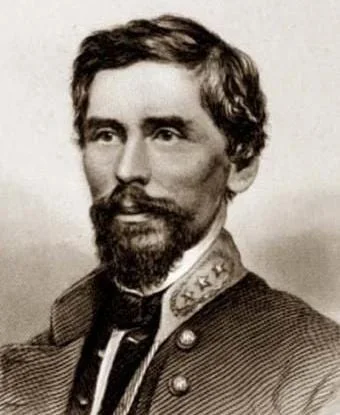
Patrick Cleburne, division commander in the Confederate Army. Born in County Cork, Ireland, he emigrated to the United States at age 21 after a brief stint as a corporal in the British Army, eventually settling in Arkansas. When war broke out he enlisted, the Confederacy grateful for anyone with prior military experience — especially from the venerated British Army. His dogged performance on the battlefield earned him both the sobriquet “Stonewall of the West” as well as a shallow grave in Franklin, Tennessee, where he fell leading his division in a suicidal charge ordered by an arrogant superior.
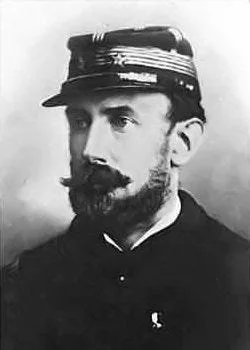
Another European with prior military service wearing the Grey was Camille Armand Jules Marie de Polignac, a French nobleman who was merely passing through America when war broke out. He offered his services and was appointed first on the staff of fellow Francophone General P.G.T. Beauregard, and then to an independent command in the Trans-Mississippi. His men — mostly hardened Texans and Mississippians — gave up trying to pronounce his name and simply called him “Prince Polecat.” Unlike Cleburne, he survived the war and returned to France, dying in Paris at the ripe old age of 81. His distant descendants, who currently rule the Principality of Monaco, have — according to Vance’s logic — “more claim over America” than many who live here.
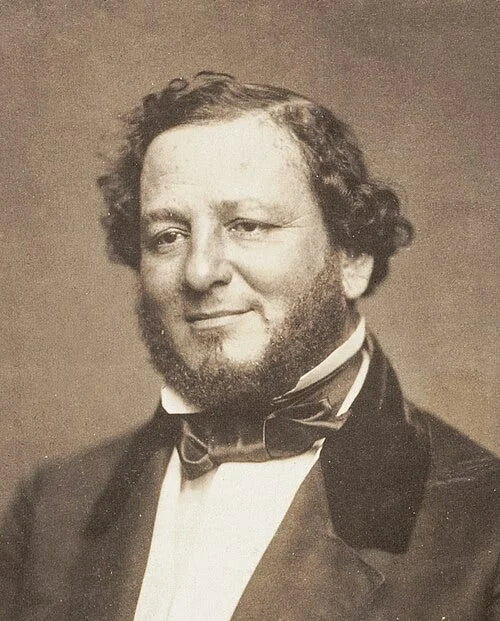
Finally, on the Confederate side, we have a member of Jefferson Davis’s cabinet: Judah P. Benjamin, the Confederacy’s Secretary of War (and later Secretary of State). A Sephardic Jew born in the West Indies to parents who had emigrated from London, Benjamin was an enigmatic figure — the first professing Jew to serve in the U.S. Senate, an unapologetic slaveholder, and a master of reinvention. He managed to give Union troops the slip at the war’s end, evading capture and reaching London by way of the Bahamas. There he had a successful second act as a barrister — defending clients against the very country he’d rebelled against — and publishing a treatise on property law that became a staple of the common law library.
Let’s turn now to the Union, where foreign birth, far from being a liability, became a powerful recruitment tool.
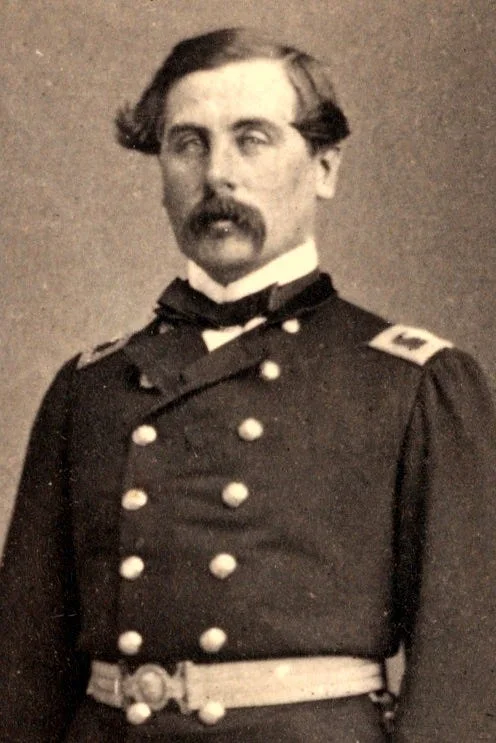
Thomas Francis Meagher, born 1823 on the south coast of Ireland, led the famous Irish Brigade through many battles in the Eastern Theatre, most notably at Antietam where they suffered devastating casualties charging the Sunken Road. Meagher was no fair-weather Irishman. He had been a zealous Irish nationalist back home, and for his trouble fomenting the Young Irelander Rebellion of 1848, he was sentenced to death — commuted at the last hour to exile in Tasmania. Fortunately for the Union, he made a daring escape from the British penal colony and landed in New York City, where he set about recruiting an all-Irish brigade to (somewhat ironically) help suppress a different rebellion. By Meagher’s reckoning, far from abandoning his old loyalties, this furthered them. As he explained: “It is not only our duty to America, but also to Ireland. We could not hope to succeed in our effort to make Ireland a Republic without the moral and material support of the liberty-loving citizens of these United States.”
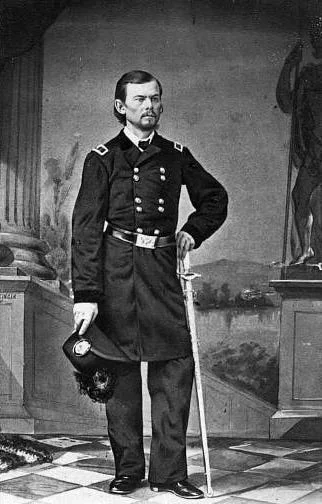
Franz Sigel was another 1848 revolutionary forced to flee when the reactionary crackdown came. Like Meagher, he was instrumental in recruiting his countrymen, most of whom barely spoke English, to fight for the Union cause. “I’m going to fight mit Sigel!” German immigrants would chant, adopting it as their rallying cry. Despite being somewhat incompetent at the strategic level, Sigel was skilled in highly technical maneuvers and withdrawals, having trained at Germany’s finest military academies, a rarity among Union officers. After the war he settled in New York City, where a statue commemorating his service still stands in Riverside Park.
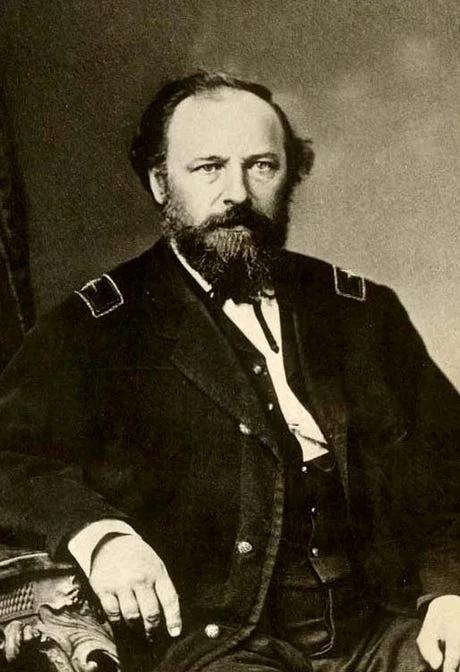
Fighting on the other side of the barricades in 1848 was Ivan Vasilyevich Turchaninov, an officer in the Imperial Russian Army who helped crush the very revolutions that Sigel and Meagher fought for. Yet when he emigrated to America in 1856 with his wife Nadine, he apparently left behind his authoritarian beliefs. Turchaninov (or Turchin as he Anglicized it), given a colonelcy when war broke out, would become one of the Union’s earliest advocates for freeing slaves, a position that in the early years made him controversial in a war still officially about preserving the Union rather than ending slavery.
With characteristic Russian bluntness, Turchin had little patience for the niceties of “civilized” warfare. In 1862, faced with guerrilla attacks from Confederate sympathizers, he unleashed his troops “Cossack-style” on Athens, Alabama, where they pillaged and burned the town in retaliation. For this he was court-martialed but his wife Nadine traveled to Washington and personally lobbied President Lincoln, who not only pardoned Turchin but promoted him to brigadier general. At his trial, Turchin exposed the absurdity of his position: the people of Alabama were appealing to the laws of the United States for protection while simultaneously waging war against those same laws. He was presaging Sherman’s famous words two years later: “War is cruelty, and you cannot refine it; and those who brought war into our country deserve all the curses and maledictions a people can pour out.”
What emerges from these stories is not a tidy narrative of blood and soil, but something far messier and more American: a republic that, even in its darkest hour, drew strength from those who chose it rather than merely inherited it. Vance’s vision collapses under the weight of history. If ancestral service in the Civil War confers special claim to America, then we must grant it equally to the descendants of Patrick Cleburne’s Irish family and Thomas Meagher’s, to the heirs of French nobility in Monaco and escaped Tasmanian convicts in New York, to Russian Cossacks who burned Southern towns and Sephardic Jews who betrayed the Union for the Confederacy. The truth is simpler and more profound: America has always been an idea open to converts, not a tribe reserved for descendants. The soldiers who died at Antietam and Gettysburg weren’t fighting to preserve some ethnic purity or ancestral inheritance — they were fighting, however imperfectly they understood it, for a proposition that has never asked where your grandfather was born.