Brexit Part IVb) Negotiations
On this page ↓
The Article 50 bill took a couple more months to wriggle its way through a maze of legislative bureaucracy before finally coming into effect on 16 March 2017. May now legally had the power to pull the trigger and she did so two weeks later on 28 March. With a ticking clock putting a sense — albeit for now mild — of urgency on the situation, the next big problem began to loom: what kind of Brexit are we going for? As discussed in Part II: The Case for Leaving, the ‘EU’ isn’t just one thing — what people refer to when they talk about the EU is a complex set of treaties, organizations, and economic arrangements, each one layered on at a different point in time, which bind together a few dozen European countries. In light of this, does ‘Brexit’ mean just leaving the political institutions (EU Parliament, EU Commission) but keeping the economic ones (Single Market, Customs Union)? Does it mean ditching the Customs Union, but keeping Single Market (like Norway) or ditching the Single Market but keeping the Customs Union (like Turkey)? The referendum ballot had not solicited answers to any of these more nuanced questions, and with most MPs against any kind of Brexit in the first place, trying to get an answer from them on what flavour of Brexit was best was like asking a vegetarian how she likes her steak cooked. Moreover, even if Britain managed to define what it is they wanted, Brussels would need to agree to it. The EU had their own agenda, an important component of which was dis-incentivizing other member states from following Britain’s lead in seceding. To accomplish that, Michel Barnier, the EU’s appointed Brexit negotiator, needed to ensure that there were at least tradeoffs in what Britain got out of the deal. They certainly weren’t about to allow Britain a free hand to pick the bits of the EU it liked and ditch the ones it didn’t. As one Danish newspaper put it, “British people are beginning to understand the EU is not a buffet.”
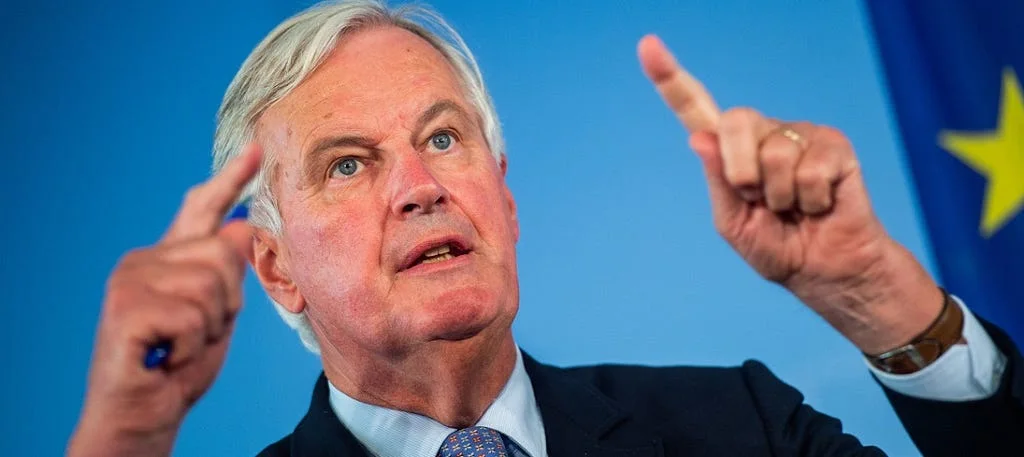
“You’re joking — not another one!”
May appreciated the challenge the negotiations would pose and resolved to at the very least make sure that she had reliable support in her own Parliament before proceeding with the EU. At the moment that was far from the case — the Conservatives had won the most recent election (the Bacon Sandwich election from Part I) but with 331 MPs, they had a mere 5 seat majority in the House. If even a half dozen MPs from her own party decided to break ranks, that could undermine her own negotiating position. May surveyed the political landscape and saw that, perhaps surprisingly given the mess Cameron had made of everything, her Conservative party was polling quite favorably. A weak opposition was mostly to explain for this: ideological infighting gripped the Labour Party and its leader, Jeremy Corbyn, had not really convinced his own party, let alone the country, that he had what it took to lead the country through the particularly turbulent waters that lay ahead. Seeing an opportunity, May took a gamble and decided to call a general election. If she could capitalize on her Article 50 momentum to deliver a killer blow to the Labour Party leader and gain 20 or so more seats, that would leave her on much more secure footing. It would also lend her an air of real legitimacy — recall that up till now she hadn’t actually won an election as leader, instead kind of stepping in as the designated survivor when Cameron resigned. For the third time in three years then, Britain went to the polls for a nationwide election.
May, like Cameron, thought an election would save her and, like Cameron, got it wrong. Against all expectations, Jeremy Corbyn managed to pull off an upset and, although failed to get a majority for himself, hugely increased the Labour Party’s vote share. Far from winning more seats, May’s Conservatives lost 13 MPs, which now meant they didn’t even have the slim majority in the House of Commons that had been the reason for calling the general election in the first place. With no party owning a majority in the House, Britain had a hung parliament. The onus was now on May to build some sort of cross-party coalition that could actually get things done as a government. Exasperated at this point, May frantically began casting around for another party she could ally with to at least retain a working control over the House. As the principal opposition, The Labour Party were of course ruled out; the Scottish National Party were also a no-go: their whole raison d’etre was breaking Scotland away from the United Kingdom and May absolutely did not need that headache to deal with at a time like this; next in terms of seat count were the Liberal Democrats — the Conservatives had cooperated with them in the past but in today’s political landscape everything was about Brexit and the Liberal Democrats were a 100% committed Remain party — it would be useless trying to get them on board with any sort of Brexit negotiations. That left only the two Northern Ireland parties: the Democratic Unionist Party (DUP) and Sinn Fein.
Now, politics in Northern Ireland was a giant hot potato that no one wanted to touch. Just navigating the political divide required a different way of thinking: across the Irish Sea, it matters a lot less whether you’re a liberal or a conservative and much more whether you are a unionist (in favor of Northern Ireland remaining part of the UK) or a nationalist/republican (in favor of Northern Ireland leaving the UK and joining the Republic of Ireland). The division carries strong religious and sectarian overtones: unionists tend to be Protestant while nationalists are generally Catholic. The two sides had duked it out for decades (often very violently) over that very question. Ever since the 1998 Belfast Agreement had brought the Troubles to a shaky close, British governments had tried as best they could to play the role of mediator between the two sides. Ms. May ideally would liked to have continued that tradition and remained (at least ostensibly) neutral, but at this point what choice did she have? She needed seats and these were the only two parties left who had them. Sinn Fein was wholly out of the question: as ardent nationalists, they didn’t even recognize the legitimacy of the Westminster Parliament. Although they participate in elections, Sinn Fein MPs practice abstentionism, meaning their elected MPs refuse to take seats in the House of Commons. It was a long-standing, solemn form of protest and one they were not about to give up now — certainly not to prop up a Conservative British government. By sheer process of elimination, then, that left the Democratic Unionist Party as poor May’s only lifeline. It was a lifeline that would not come cheap: the DUP and its leader, Arlene Foster, understood their position as kingmaker and delighted in squeezing the Conservatives for as much money as they could: £1 billion was the final cost of DUP friendship. May looked visibly uncomfortable at the signing ceremony, and who can blame her? No one likes to part with that kind of money, especially not when its for an organization that has described same-sex relationships as “repulsive” and “comparable [to child abuse].”
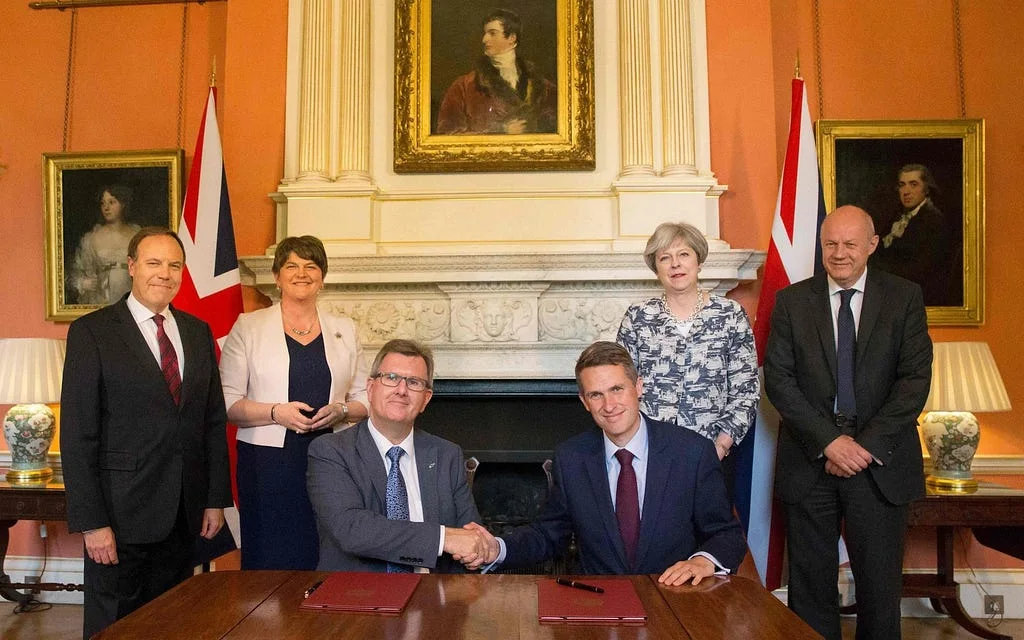
Brexit Means Brexit
Having thus squandered three of her precious 24 months on a useless election that had only left her worse off, May returned, embittered, to the task of figuring out what Brexit was going to look like. May herself had campaigned for Remain in 2016, a fact she was often reminded of by ‘true Brexiteers’ in Parliament and the public at large. She was under constant pressure not to buckle and cave in, either to the EU or to the ardent Remainers who still regarded Brexit as stoppable. Ironically, this scrutiny led May to push for a Brexit strategy that was in many ways more extreme than that which would be adopted by a ‘real Brexiteer’, whose loyalty would have been given the benefit of the doubt. Like a nervous youth trying to prove his devotion to the cause to gang elders, May came out with a plan that on the surface looked even more extreme than many Brexit voters had wanted: Britain was to exit not only the political institutions of the EU, but the Single Market and the Customs Union as well. All of it was to be ripped up and thrown away. In its place, May sought a new free trade deal that kept Britain aligned with the EU, but not bound by its laws or court rulings. These were her so-called “red lines” to frame any negotiation. Most alarmingly, or impressively, depending on your point of view, May affirmed that “no deal was better than a bad deal” — in other words she was willing to walk away from negotiations entirely if they didn’t go her way and take Britain out without a replacement agreement in place. It sure was tough talk, but it still remains unclear whether she actually intended to back it up. Her speechwriter at the time, Chris Wilkins, conceded that the no deal threat “wasn’t done on the basis of a great deal of evidence…It was done on the basis that this was something we had to say.”
To start out with, it looked like May wouldn’t need to back it up. The EU agreed in principle to the idea of a new trade agreement without the frills of political association attached. There was some haggling over the ‘divorce bill’: the money Britain owed the EU for budget contribution pledges made prior to Brexit. EU negotiators assessed the sum to be £92bn and wanted it paid up-front, before any new treaty was signed (after all Britain had in theory already committed to this spending); British negotiators retorted that based on their calculations they owed no more than £37bn and they damn well weren’t going to hand over a penny of it until after the negotiations had concluded. Some were even arguing that we should leverage the financial settlement as a negotiating tool by refusing to pay any of it in the case where no deal was reached. While the dispute made for some theatrical grandstanding and furnished politicians on both sides with lots of valuable opportunities to show themselves “sticking up for the taxpayer”, it never really seemed like a hard blocker. No doubt they would land on a figure somewhere in the middle of 37bn and 92bn and no doubt agree to some mechanism of transferring it that left both parties secure that they weren’t going to get cheated. There was really only one sticking point that remained and it didn’t have anything to do with money: what to do about Northern Ireland?
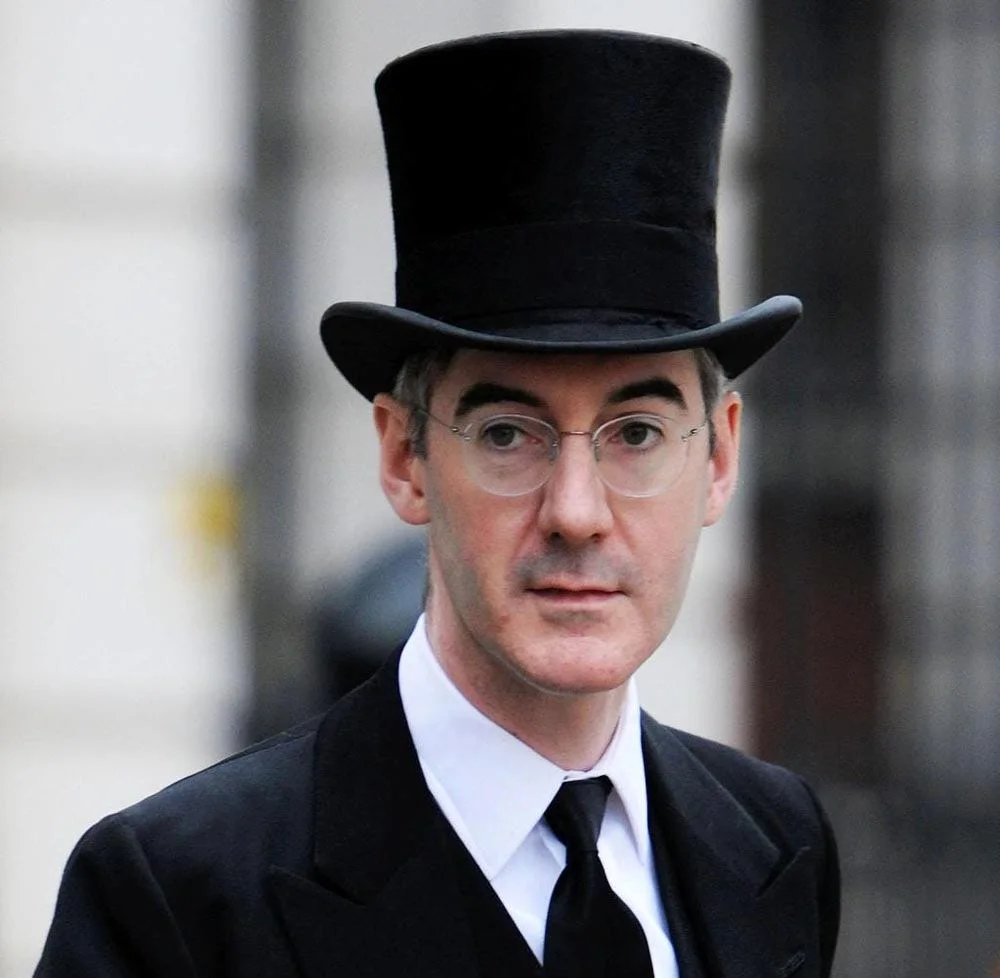
The Irish Question
Ah, Ireland: a majestic land of rolling green hills, melodic accents, and a proud people. It’s 800-year history with Britain merits not only a separate blog post, but an entire library. For the purposes of our story, what’s important to know is that the 1998 Belfast Agreement had more or less left both unionists and nationalists satisfied by making a compromise that kept Northern Ireland de jure in the United Kingdom but de facto very closely tied to the Republic of Ireland as well. Britain withdrew its vast security apparatus and, because both Britain and Ireland were members of the Single Market and Customs Union, goods, services and (important for nationalists) people could pass back and forth across the border unhindered. If you go to the ‘border’ today, you will see no signs, fencing or even demarcation on any road that you are passing from the Republic to the UK. The only way you’d tell which side you’re on is whether you start paying for things in pounds instead of euros. This way, Nationalists can feel like they are part of Ireland, and Unionists can still tell themselves they are British. It’s yet another British quirk that for some reason just about works in practice even though it’s kind of fuzzy from a legal standpoint.
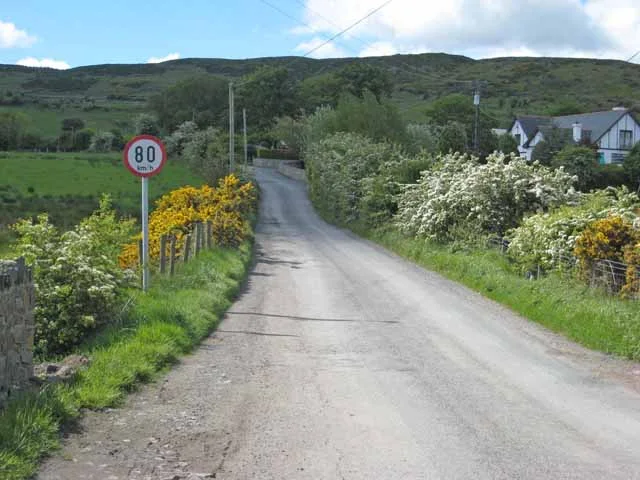
But fuzzy wasn’t going to do for the EU, whose plenipotentiaries explained to May that this setup, quaint as it might be, wasn’t going to fly in a post-Brexit world: if Britain wanted to be out of the Customs Union and Single Market, we would need to have a proper border between the two regions so we can start regulating the flow of goods, services and people. There were three options to fix things: 1) Not leave the Customs Union + Single Market at all, in which case we can continue with the current nebulous border arrangement but then, but that violated one of Theresa May’s predefined red lines. 2) Put the border between Northern Ireland and the Republic of Ireland, a move that would incense nationalists. When I say ‘incense’ I don’t mean that they would fire off a few angry tweets and make placards for a friendly protest in the town square: the nationalists were backed by the IRA, arguably Europe’s most successful terrorist organization, which at one point came within inches of killing Britain’s Prime Minister. Gruesome as it was, their opinions were going to be taken seriously. 3) Put the border between Northern Ireland and the rest of the UK. Under this arrangement, Northern Ireland would effectively remain part of the Customs Union and goods and services would now be checked only when they flowed across the Irish Sea. This was the choice preferred by the EU nations, most especially the Irish Republic, which welcomed an opportunity to edge Northern Ireland slightly further away from Britain’s orbit and slightly closer to its own. For the same reason, this solution was disconcerting to many in the British government and even more so to the unionists, who themselves hardly shied away from a fight.
May found herself in a bind: there simply was no solution that didn’t leave some die-hard group — unionists, nationalists, or Brexit voters — feeling angry and betrayed. In classic career politician fashion, she decided to just kick the can down the road: she needed to be able to put “delivered Brexit” on her resume but didn’t want to actually make this tough decision. She went back to the EU and said look, let’s just have Britain leave the EU first — once we leave Britain will remain in ‘regulatory alignment’ with the EU (meaning we can keep the open border) for two years (this is in addition to the two year transition period they were currently in) and later down the road I promise I’ll think of some way to solve this Irish border question. Specifically, the British government argued that they could come up with “high-tech solutions” which would allow both sides to regulate the flow of goods and services without physically stopping vehicles or people at the border itself. No one ever really explained what this mythical, futuristic “high-tech” solution was going to be but all the usual buzzwords were bandied about: drones, AI, GPS satellites and, of course, that one guy claiming “blockchain can solve this”. The EU were understandably skeptical and weren’t about to sign a treaty based on vague future promises based on science fiction. They went back to May and said look, you can mess about with all the technology you want but as a little insurance policy we want the default resolution to be on our side. This in essence is what the infamous “Irish Backstop” is: a provision in the Brexit deal saying that if no solution is found for the Irish border question by the end of the two year transition period, the status quo will automatically resolve to option 3) putting a border between Northern Ireland and the rest of the UK. For Ms. May, that was acceptable: either she genuinely believed that the promised ‘high-tech solutions’ would come to fruition by then or, perhaps more likely, figured that by the time that debt came to be collected it wouldn’t be her problem to deal with.
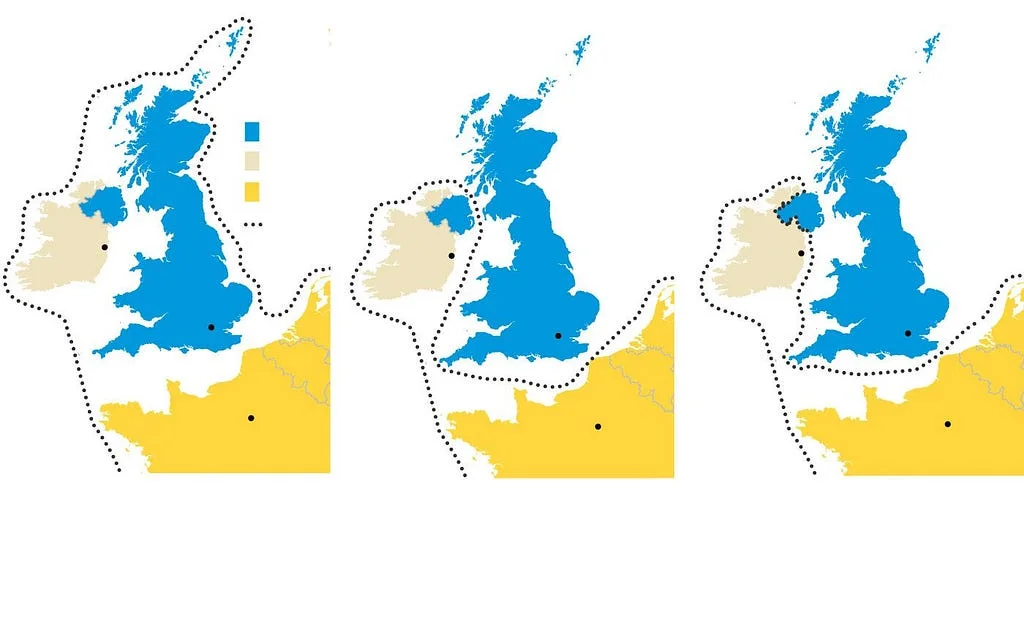
The DUP, still in coalition with May and watching all of this unfold with horror, immediately recognized that the British government was selling them down the river in exchange for political expediency. The harsh truth was that there were no high-tech solutions and in a few years they would find themselves on the wrong side of a customs border between them and the country they had striven so long to remain a part of. Arlene Foster, the DUP leader, declared that she could not support the Brexit Agreement while it contained the backstop proviso. DUP opposition alone would have been enough to doom the bill (recall their 10 MPs are what gave May her slim majority), but as it turns out the European Research Group, a bloc of 50 or so Brexit-leaning Conservative MPs, came out vociferously against the backstop too. In part they simply sympathized with the DUP’s sense of betrayal, but also they saw the backstop as a craven capitulation to EU demands: who did these eurocrats think they were telling us how we must carve up our own sovereign territory! The backstop is only there to protect the integrity of the EU’s Customs Union and Single Market: why is that even our problem to solve? We left the EU precisely to rid ourselves of this kind of foreign meddling in our affairs by EU bureaucrats, and now we’re letting them do it all over again even after we leave! Cue reminders that May didn’t even vote for Brexit in the first place — no wonder she caves at the first sign of resistance!
May’s red lines had failed to win her credibility with Brexiteers and had backed her into an unwinnable negotiating position. She returned to parliament in early 2019 hoping against hope that something would give and she could push her unpopular Brexit deal over the line.